Beijing green-lights its AI models for the world, SpaceX plots a fourth wireless carrier, and a two-decade-old flaw reminds everyone that the internet’s foundations can still shake.
Today’s episode of Daily Tech and AI opens with a strange mirror image in the global AI race, a bold new move from SpaceX into phone service, and a security scare that took chunks of the internet offline. Together, they tell one story: the AI race is no longer just about who builds the smartest model. It is about who controls the networks, the towers, and the code underneath everything.
DeepSeek and MiniMax Win Beijing’s Green Light
We start in China, where the AI story just flipped again. DeepSeek and MiniMax have won state approval for global use of their AI models, according to a post from a social media account affiliated with state broadcaster CCTV. That is the same DeepSeek that Washington just ordered out of federal systems, and that just raised roughly fifteen billion dollars from investors including CATL and Tencent.
A Whiplash Week for DeepSeek
The whiplash is hard to overstate. First, the United States Department of Homeland Security ordered DeepSeek removed from federal civilian systems. Then, within days, DeepSeek closed one of the largest funding rounds in Chinese history. And now Beijing is effectively giving DeepSeek and MiniMax a green light to be used around the world. The timing matters, because just last week China proposed export controls on twenty-three AI technologies, including models, agents, and computing clusters. This approval is not Beijing stepping back from control. It looks more like Beijing deciding which champions it wants competing globally, and on its terms. The commerce ministry said most AI technologies would remain exportable, with simpler licensing for open source exports and for Chinese companies running their own computing centers overseas. The message seems to be that China will guard the crown jewels, but it still wants its models everywhere. The question for everyone else is whether the rest of the world treats a state-approved Chinese model differently from an independent one. A stamp of approval in Beijing could be a selling point in some markets and a red flag in others, and that tension is not going away.
SpaceX Wants to Become America’s Fourth Carrier
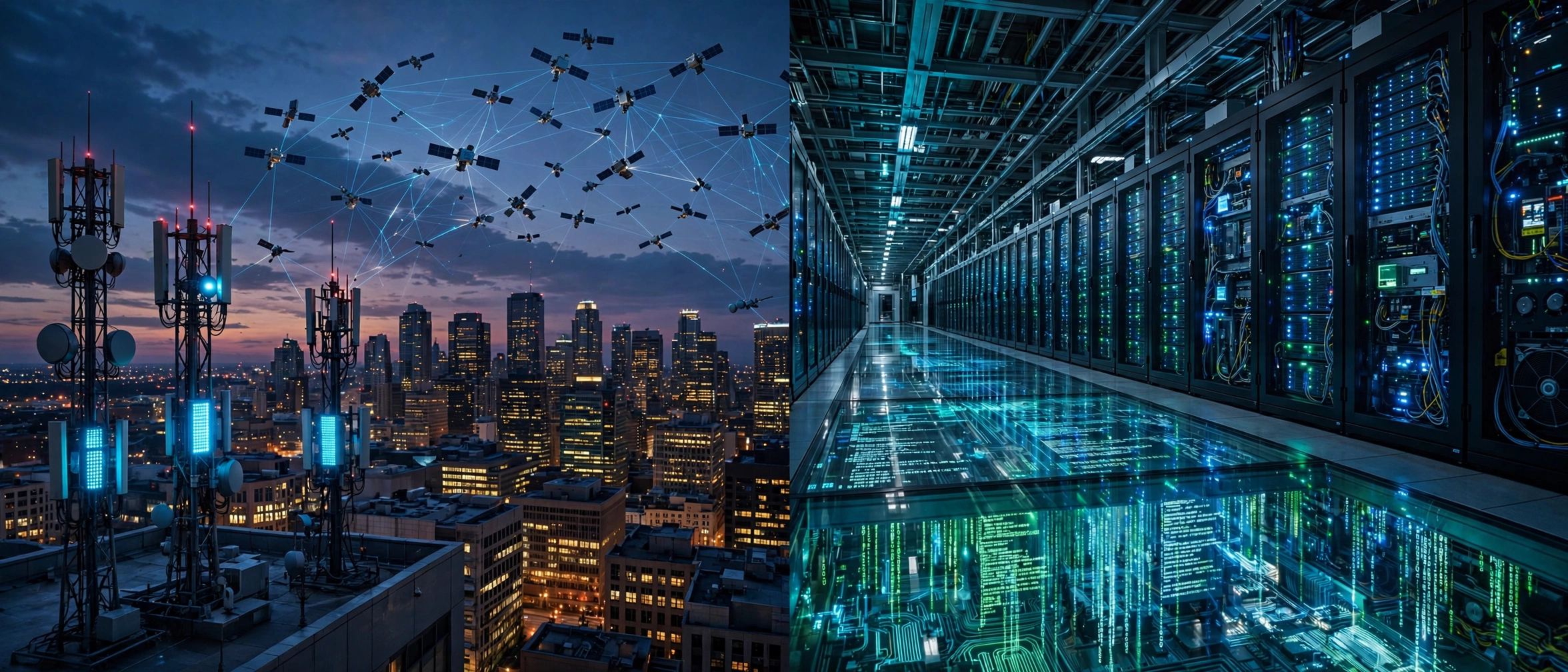
Our second story redraws a different map: the map of American wireless service. SpaceX is in talks to secure access to at least eighty thousand cell sites across the United States, according to Bloomberg News reporting covered by Reuters, with the goal of building a fourth nationwide wireless carrier from scratch. Eighty thousand sites is an enormous number — about half of the roughly one hundred fifty-eight thousand purpose-built cell towers operating in the United States last year. For scale:
- Crown Castle operates about forty thousand towers
- American Tower operates about forty-two thousand towers
- Vertical Bridge operates around eighteen thousand towers
It also follows SpaceX buying nationwide low-band spectrum, the kind of airwave real estate you need if you want phones to work everywhere, not just in cities. Put the spectrum together with the tower talks, and this stops looking like a rumor and starts looking like a plan.
The Market Reacts — and the Timeline Problem
The market reaction told the story immediately. Shares of AT&T, Verizon, and T-Mobile all fell in extended trading, while tower operators jumped, with Crown Castle up more than eleven percent. Investors are treating this as a real threat, even though building a carrier would take years and, by one estimate, more than eighty billion dollars.
The big caveat is time. A terrestrial network takes years to build, and SpaceX would be going up against three entrenched carriers. But SpaceX has already shown with Starlink that it is willing to spend years building infrastructure other people called impractical. So the carriers cannot just laugh this off.
PHP2Shell: Two Flaws, Twenty Years, One Frantic Day
Our third story is the one that probably touched your own browsing this week, even if you did not notice. It is called PHP2Shell, a pair of critical flaws in PHP, the programming language that quietly powers a huge share of the web. PHP is everywhere and invisible: when you load a page, PHP is often the thing assembling it behind the scenes. It runs nearly seventy percent of websites whose programming language can be identified, and it sits underneath WordPress, which alone powers about forty percent of all websites. The two flaws are rated nine point two out of ten on the standard severity scale. In plain terms, an attacker with no password or account could run their own code on a vulnerable server, which could mean stolen data, defaced pages, or a full system takeover. And the response was dramatic. Government websites in Germany, France, Belgium, the Netherlands, and Finland were taken offline as a precaution, along with hospitals, schools, and sites like the Port of Rotterdam. The idea was simple: if you cannot patch immediately, go dark until you can. Patches did arrive on October twenty-first, and the PHP Foundation said that, to its knowledge, there had been no successful remote code execution attempt.
AI Finds the Bug — and the Race to Exploit It
But the scramble itself is the story, because these flaws sat in PHP for roughly twenty years, and they were surfaced with help from AI tools. AI found a hole humans had missed for two decades, and then everyone had about a day to fix it. That is the part that should make every site owner pause. The same AI capability that helps researchers find bugs also helps attackers turn a public fix into a working exploit within hours. Cloudflare reported thousands of exploit attempts before the announcement, and millions by the following night. Patching is no longer a chore you get to next week. It is the whole job.
Quick Hits: SpaceX’s Thirteen-Gigawatt Bet and Earnings Week Ahead
First, Elon Musk predicted this week that SpaceX will have at least thirteen gigawatts of computing power by the end of twenty twenty-seven, up from just one point seven gigawatts at the end of September. That is an extraordinary ramp, and it comes as several United States states have imposed moratoria on new data center construction, which could make existing capacity even more valuable.
Second, keep an eye on next week, because Alphabet, Microsoft, and Amazon all report earnings. Investors have grown wary of the sheer scale of AI data center spending, and this will be the first real test of whether the third quarter lived up to those very high expectations. If the numbers disappoint, expect the AI stock selloff seen on Thursday to find a second wind.
So here is the takeaway. China is picking its global AI champions, SpaceX is trying to become your phone company, and the internet just got a reminder that its oldest foundations can still shake.
Sources
DeepSeek and MiniMax win Chinese state approval for global AI use — Reuters
SpaceX seeks eighty thousand US cell sites for a fourth wireless carrier — Reuters
PHP2Shell critical PHP flaws force websites offline — The Verge
SpaceX predicts thirteen gigawatts of computing power by end of 2027 — Reuters
Hyperscaler earnings week ahead for Alphabet, Microsoft and Amazon — Reuters
Adapted from the October 24, 2026 episode of Daily Tech and AI.
Daily Tech and AI is AI-voiced and produced by Angelo Ruiz.
Leave a Reply